
Fully Bonded and Insured
License# 17157
Electrical Panel Replacement Cost: Your Ultimate Budget Guide
February 7, 2026
Planning your electrical upgrade? Discover the true cost to replace electrical panel and wiring, factors, and smart savings strategies.
Why Understanding Electrical Panel and Wiring Replacement Costs Matters
The cost to replace electrical panel and wiring typically ranges from $1,500 to $4,000 for a standard panel replacement, while full-service upgrades with extensive wiring can reach $8,000 to $12,000 or more. Here's what you need to know:
Quick Cost Breakdown:
- 100-amp panel replacement: $1,500 - $2,500
- 200-amp panel upgrade: $2,500 - $4,500
- 400-amp service upgrade: $4,500 - $12,000+
- Wiring replacement: $6 per linear foot
- Labor costs: $50 - $150 per hour
- Permits and inspections: $150 - $2,000
Your home's electrical system is the backbone of everything you do—from brewing your morning coffee to charging your electric vehicle. But if you're living in an older Northern New Jersey home, there's a good chance your electrical panel is struggling to keep up with modern demands. When your kitchen lights dim every time the microwave runs, or your circuit breakers trip with frustrating regularity, it's not just an inconvenience—it's a warning sign.
Upgrading your electrical panel and wiring can bring your home up to code, help you avoid electrical fires, and ensure your system can handle today's energy-hungry appliances. The process involves more than just swapping out a box on your wall. You're looking at labor costs, material expenses, permit fees, and potentially unexpected costs like drywall repair or trenching for underground lines.
Most residential electrical panel upgrades in Northern New Jersey cost between $1,500 and $3,000 for a straightforward replacement, but that number can climb significantly if you need a full service upgrade from 100 to 200 amps, or if your home requires extensive rewiring. Homes built before the 1970s often need more work, and every project must meet strict New Jersey electrical codes.
The good news? Understanding what drives these costs helps you budget accurately and avoid surprises. Whether you're planning ahead for an EV charger installation, dealing with an outdated fuse box, or simply want peace of mind about your home's electrical safety, knowing the numbers puts you in control.
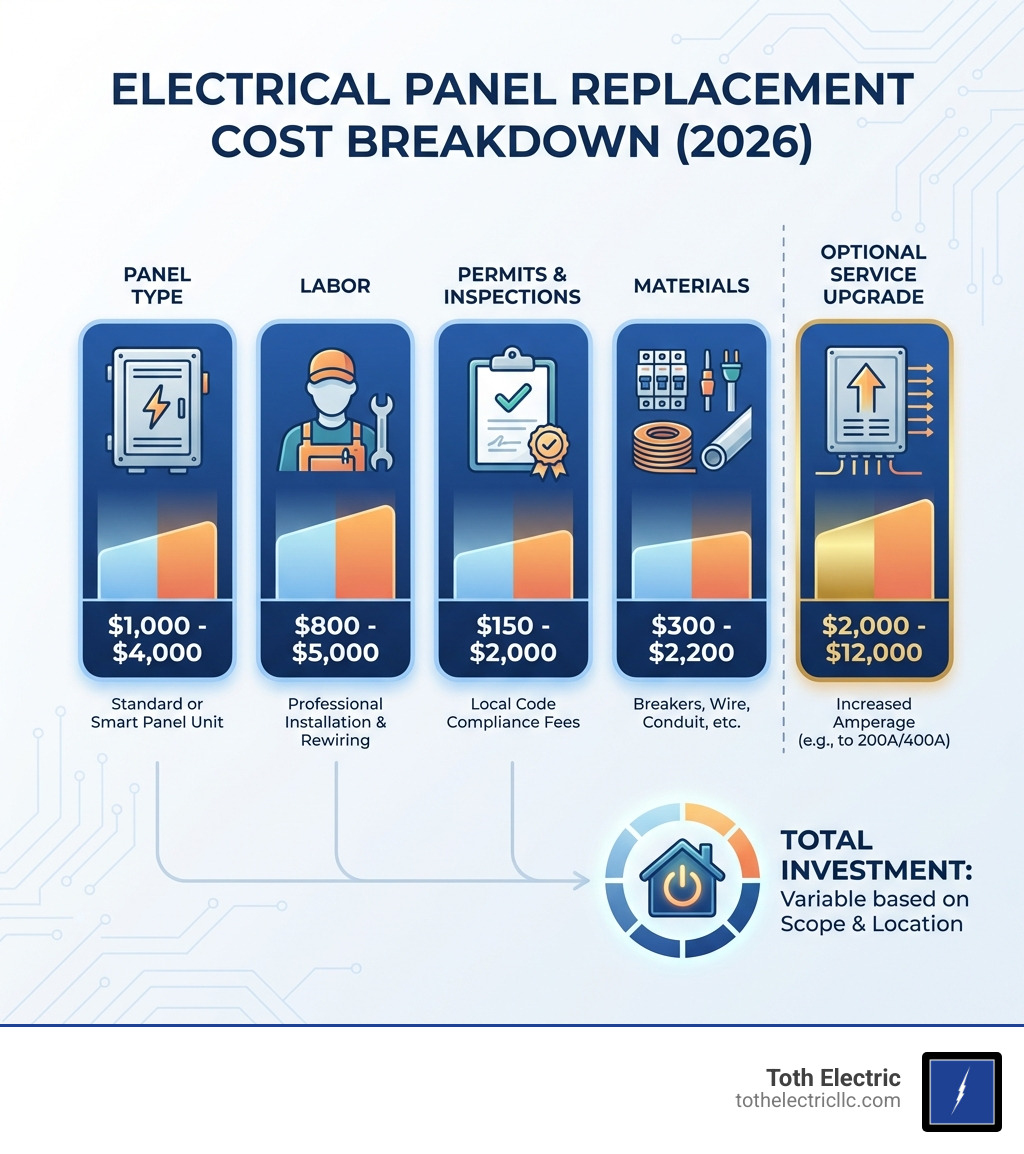
Average Cost to Replace Electrical Panel and Wiring
When considering the cost to replace electrical panel and wiring, it's important to understand that there's no single, fixed price. The average cost can vary significantly based on the scope of work, your home's existing electrical infrastructure, and local labor rates here in Northern New Jersey.
Nationally, electrical panel replacement averages about $1,300, with a cost range of $500–$2,100 for just the panel. However, this is often just the starting point. When you factor in wiring, permits, and labor, the total can quickly escalate. For a complete picture of what to expect, we often see our customers in New Jersey paying between $1,200 and $4,500 for an electrical panel upgrade, and potentially much more if extensive wiring replacement is needed.
According to Angi, panel replacement can range from $519 to $2,187, while NerdWallet suggests an estimated cost of $1,283 to $1,556 per panel as of October 2025. Consumer Affairs notes that replacing electrical panels can cost $521 to $2,096 on average, potentially exceeding $4,000, and wiring costs around $6 per linear foot.
Here's a general comparison of costs for different amperage upgrades, which often involve varying degrees of wiring work:
| Panel Amperage Upgrade | Typical Cost Range (Northern NJ) | Notes |
|---|---|---|
| 100-amp (Basic) | $1,500 - $2,500 | Typically involves replacing an older 100-amp panel with a new one of the same size. May include minor wiring adjustments. |
| 200-amp (Standard Upgrade) | $2,500 - $4,500 | The most common upgrade for modern homes. Often requires a service upgrade from the utility, new mast/meter box, and some main wiring replacement. |
| 400-amp (Heavy-Duty Upgrade) | $4,500 - $12,000+ | For very large homes or those with significant electrical demands (e.g., multiple EV chargers, large workshops, extensive smart home systems). May involve two 200-amp panels or a single 400-amp unit, and usually a full service upgrade. |
| Partial Wiring Replacement | $6 - $10 per linear foot (plus labor) | For specific circuits or sections of faulty wiring. |
| --- | --- | --- |
| Electrical Panel | $250 - $450 | The circuit breaker box itself, excluding labor and extra components. |
| Circuit Breakers | $5 - $250 each | Cost depends on amperage and type (e.g., standard, GFCI, AFCI). |
| Wiring (per linear foot) | $0.20 - $3.50+ | Varies widely by wire type (copper, aluminum, gauge) and application. |
| Labor (per hour) | $50 - $150 | Highly skilled work by licensed electricians. |
| Permits & Inspections | $150 - $2,000 | Mandatory for safety and code compliance. Varies by municipality. |
| Meter Box/Socket | $100 - $300+ | Often upgraded with panel, especially for amperage increases. |
| Grounding Rods/System | $100 - $500+ | Essential for safety; may need upgrades to meet current codes. |
| Subpanel Installation | $500 - $1,800 | For adding circuits to a specific area (e.g., garage, basement). |
| Additional Work | Variable | Drywall repair, trenching, panel relocation, etc. |
The cost of materials for a typical panel replacement can range from $300 to $2,200, including circuit breakers, wire, and bus bars. However, labor often accounts for a significant portion, sometimes even more than the materials themselves. A straightforward panel swap can take a licensed electrician 6-12 hours, while more complex projects involving service upgrades or extensive wiring can take 15-40 hours or more.
Breaking Down the Cost to Replace Electrical Panel and Wiring by Component
When we talk about the cost to replace electrical panel and wiring, we're looking at several key components, each with its own price tag and impact on the overall budget. It's like building a car; you need the engine, the wheels, the chassis, and the skilled mechanics to put it all together.
Here are some common material price ranges you might encounter:
- Copper Wiring: The type and gauge of wiring significantly impact costs. Multi-conductor wiring can be $0.20 to $0.35 per linear foot, while non-metallic sheathed cables (common for indoor use) can range from $0.60 to $3.50 per linear foot. Underground feeder cable, used for outdoor runs, might be $0.60 to $2 per linear foot. For comprehensive details on different wiring types, you can explore our resources on Electrical Wiring Services.
- Circuit Breakers: These are the unsung heroes of your electrical system, protecting your home from overloads. Standard 15-amp or 20-amp breakers are relatively inexpensive, but specialized GFCI (Ground Fault Circuit Interrupter) or AFCI (Arc Fault Circuit Interrupter) breakers, which offer improved safety, can cost more. A new circuit breaker can range from $250 to $400, but individual breakers are much less.
- Meter Box (or Meter Socket): This is where your utility company's power connects to your home. If you're upgrading your amperage, especially from 100 amps to 200 amps, the existing meter box may need to be replaced to handle the increased load.
- Grounding Rods/System: A proper grounding system is crucial for safety, diverting excess electricity safely into the earth. Upgrading your panel often requires ensuring your grounding meets current codes, which might involve installing new grounding rods or improving the existing system.
- Subpanels: Sometimes, instead of a full main panel upgrade, or in addition to it, a subpanel is installed to manage circuits in a specific area, like a detached garage, a new addition, or a finished basement. Installing a subpanel can cost between $500 and $1,800, depending on its size and complexity.
Don't forget the labor! While materials are a direct cost, the expertise of a licensed electrician in Northern New Jersey is invaluable. Our professionals ensure everything is installed safely and up to code, which is why labor can often be the largest portion of the expense.
Regional Variations in the Cost to Replace Electrical Panel and Wiring
Just like the price of a bagel changes from New York City to, say, Kansas, the cost to replace electrical panel and wiring varies significantly by region. Here in Northern New Jersey, we operate in what's generally considered a higher-cost market compared to many other parts of the country.
Factors contributing to these regional differences include:
- Northeast Labor Markets: Our licensed electricians are highly skilled professionals, and the demand for their expertise, combined with the higher cost of living in areas like Union, Montclair, and Morristown, translates to higher labor rates. While nationally, electricians charge $40-$100 per hour, in our region, it's often at the higher end of that scale, or even higher, depending on experience and specialization.
- Urban vs. Rural Pricing: Generally, urban and densely populated suburban areas like Jersey City or Newark tend to have higher costs due to increased overhead, permit stringency, and demand. More rural areas might see slightly lower rates, but the difference might not be as dramatic as you'd think when dealing with specialized electrical work.
- Local Building Codes: Each municipality in New Jersey has its own set of building codes and requirements. These codes dictate specific materials, installation practices, and safety measures that must be met. Older homes in places like South Orange and West Orange, which are prevalent in our service areas, often require extra updates to meet current code requirements during a panel or wiring replacement, pushing the overall cost higher.
- Permit Price Fluctuations: Permit and inspection fees can vary from one town to another within Northern New Jersey. While some general ranges exist, check with your local municipality for exact figures. These fees, while necessary, add to the total project cost. For specific information on our services in the region, you can visit our Service Panel Replacement NJ page.
Understanding these regional nuances helps us provide you with the most accurate estimates and ensures there are no surprises when it comes to your electrical project.
Key Factors Influencing Your Total Project Budget
Beyond the basic components, several factors can significantly influence the overall cost to replace electrical panel and wiring. Think of it as adding optional features to that car we mentioned earlier – they improve performance and safety, but they also add to the price tag.
Here are the primary cost drivers we consider:
- Amperage Requirements: Upgrading from an older 60-amp or 100-amp panel to a modern 200-amp service is a major factor. The higher the amperage, the more robust the panel and associated wiring need to be, which increases material and labor costs.
- Panel Relocation: If your current electrical panel is in an inconvenient or unsafe location (e.g., in a closet or too close to plumbing), moving it can add $800 to $3,000 in labor costs. This often involves more extensive wiring changes and possibly patching walls.
- Home Age and Condition: Older homes, especially those built before the 1970s, frequently require more extensive work. They might have outdated wiring types like knob and tube or aluminum, or simply undersized systems not designed for today's electrical loads. Addressing these issues adds to the complexity and cost. We often see this when providing Top Electrical Services Needed for Older Homes in South Orange.
- Extent of Wiring Replacement: Are we just replacing the main service entrance cables, or do we need to rewire entire circuits or even the whole house? Rewiring an entire house can easily exceed $8,000 and sometimes much more, making it a major cost driver.
- Drywall Repair: Electrical work often requires opening walls to access wiring. If we need to cut into your drywall, you'll need to factor in repair costs, which can be $1.50 to $3 per square foot for patching.
- Trenching for Underground Lines: If your main electrical service comes in underground and needs to be replaced, or if you're adding new outdoor circuits, trenching can cost $600 to $2,100.
- Unexpected Findies: During a project, we might uncover hazardous wiring, asbestos-containing components (rare but possible in very old homes), or other unforeseen issues that require additional work and specialized handling. This is why we always recommend a budget cushion of 10-20% for contingencies.
It's worth noting that electrical issues cause over 51,000 fires each year nationally, often due to overheating wires. Investing in a proper upgrade isn't just about convenience; it's a critical safety measure for your family and your home.
The Impact of Upgrading to 200-Amp Service
Upgrading to a 200-amp service is arguably the most common and beneficial electrical upgrade for homeowners in Northern New Jersey today. While a basic 100-amp panel replacement might cost between $1,200 and $2,500, a 200-amp upgrade generally runs from $2,500 to $4,500. This increase in cost reflects the need for heavier gauge wiring, a larger panel, and often, an upgrade to the utility company's service entrance equipment.
So, why bother with the extra expense? It's all about accommodating your modern lifestyle and future needs:
- EV Charging Needs: Electric vehicles are here to stay, and charging them at home requires significant power. An EV charger can draw anywhere from 16 to 80 amps, which can easily overwhelm an older 100-amp system. A 200-amp panel ensures you can charge your car efficiently without tripping breakers or stressing your electrical system.
- HVAC Systems and Large Appliances: Modern air conditioning units, heat pumps, electric furnaces (drawing 60-80 amps), and large kitchen appliances like induction cooktops or double ovens demand substantial power. A 200-amp panel provides the necessary capacity to run all these simultaneously without a hiccup.
- Future-Proofing Your Home: Even if you don't have an EV or a brand-new HVAC system today, you might tomorrow. Upgrading to 200 amps now means your home is ready for future technological advancements and increased electrical demands, saving you money and hassle down the line. This proactive approach is a smart part of The Cost of Electrical Upgrades: Planning Your Home Improvement Budget.
- Smart Home Integration: As smart home devices become more prevalent, from advanced lighting systems to whole-home automation, they also contribute to your overall electrical load. A robust 200-amp panel provides the stable foundation these systems need.
Upgrading to 200-amp service is an investment in your home's functionality, safety, and future value. It's about ensuring your home can keep up with the demands of the 21st century.
Hidden Costs: Permits, Inspections, and Code Compliance
Ah, the paperwork! While not as exciting as new wiring, permits and inspections are non-negotiable parts of the cost to replace electrical panel and wiring, especially here in Northern New Jersey. They ensure your electrical work is safe and up to code, protecting your family and your investment.
Here's what you need to know:
- Utility Company Coordination: Before any major electrical panel work can begin, we need to coordinate with your local power company (like PSE&G or JCP&L in New Jersey) to temporarily shut off and then reconnect service. While they handle the power, they don't cover the cost of your panel upgrade. This coordination also affects timing, as we need to schedule around their availability.
- Municipal Fees: Every electrical panel replacement or significant wiring job requires a permit from your local municipality. Permit fees in our service areas can typically range from $150 to $2,000, depending on the scope of work and local regulations. For example, Cook County, IL (similar to some higher-cost areas in NJ) sees fees typically between $50 and $300. These fees are mandatory. We always include these costs in our detailed quotes, so you're never caught off guard.
- Mandatory Safety Upgrades: During an inspection, especially in older homes, the inspector might require additional safety upgrades to bring your system fully up to current New Jersey electrical codes. This often includes:
- AFCI (Arc Fault Circuit Interrupter) Breakers: These detect dangerous electrical arcs that can cause fires and are typically required in bedrooms and other living areas.
- GFCI (Ground Fault Circuit Interrupter) Outlets/Breakers: These protect against electric shock and are mandatory in wet locations like kitchens, bathrooms, garages, and outdoors.
- Proper Grounding: Ensuring your home's electrical system is correctly grounded is a fundamental safety requirement.
These mandatory upgrades, while adding to the cost, are vital for your home's safety. They're part of ensuring that your home's electrical system is not just functional but also adheres to the highest safety standards. For instance, sometimes a repair just won't cut it, and a full replacement is needed to meet these current standards. We can help you determine How Do You Know If Your Home's Wiring Can Be Repaired or If You Need to Rewire Your Entire Home?.
Signs You Need an Electrical Panel and Wiring Replacement
Your home's electrical system is usually out of sight, out of mind—until it starts acting up. When it does, those quirky behaviors aren't just annoying; they're often flashing red warning lights that it's time to consider the cost to replace electrical panel and wiring. Ignoring these signs can lead to serious safety hazards, including electrical fires.
Here are the tell-tale signs we advise our Northern New Jersey clients to look out for:
- Flickering or Dimming Lights: If your lights frequently flicker or dim, especially when you turn on an appliance, it suggests your electrical system is overloaded or struggling to provide consistent power.
- Burning Odors: A burning smell coming from outlets, switches, or your electrical panel is a critical sign of overheating wires or components. This requires immediate attention.
- Frequent Breaker Trips: Circuit breakers are designed to trip when a circuit is overloaded, preventing damage and fires. If a breaker trips constantly, it means that circuit can't handle the demand, and your panel might be undersized or faulty.
- Buzzing Sounds: Unusual buzzing or humming noises coming from your electrical panel or outlets can indicate loose wiring or other internal issues that need professional inspection.
- Hot Outlets or Switch Plates: If an outlet or switch plate feels warm to the touch, it's a sign of excessive heat, which can lead to melting and fire.
- Rust or Corrosion on the Panel: Any signs of rust or corrosion on your electrical panel indicate moisture exposure, which can degrade components and create dangerous conditions.
- Outdated Fuse Box: If your home still uses a fuse box instead of a modern circuit breaker panel, it's a strong indicator that your electrical system is outdated and likely needs an upgrade for safety and capacity.
- Age of Panel: Electrical panels typically last 20 to 40 years. If your panel is older than 25 years, especially if you're experiencing other issues, it's likely due for replacement.
UL Solutions highlights 8 Signs You May Have a Problem with Your Electrical Wiring, and we've also compiled a list of 10 Common Electrical Issues Homeowners Shouldn't Ignore. If any of these sound familiar, it's time to call in the professionals.
Transitioning from Fuse Boxes to Breaker Panels
If your Northern New Jersey home still has a fuse box, it's not just a charming relic from the past; it's a significant safety concern and a strong indicator that your electrical system is ready for an upgrade. The cost to replace electrical panel and wiring in this scenario often includes replacing the fuse box with a modern circuit breaker panel.
Here's why this transition is so important:
- Outdated Technology: Fuse boxes are an outdated method of circuit protection. They rely on fuses that blow and need to be replaced, while modern circuit breakers simply trip and can be reset. This might seem like a minor convenience, but it's much more.
- Safety Hazards: Fuse boxes are generally less safe than modern breaker panels. They are more prone to improper fuse sizing (e.g., homeowners installing a fuse with too high an amperage, creating a fire hazard), and they don't offer the same level of protection against overloads and short circuits as modern breakers.
- Limited Capacity: Most fuse boxes were installed when homes had far fewer electrical demands. They often struggle to handle the load of today's appliances, leading to frequent blown fuses and an overall unreliable electrical system.
- Insurance Eligibility: Some homeowners insurance companies may refuse to cover homes with fuse boxes or charge higher premiums due to the increased fire risk. Upgrading can potentially lead to lower insurance rates and better coverage.
- Increased Home Value: A modern electrical panel is a significant selling point and can increase your home's overall value. It signals to potential buyers that the home's electrical system is safe, up-to-date, and capable of handling modern needs.
While replacing a fuse box might be a bit more involved than swapping out a newer breaker panel (sometimes requiring more extensive wiring updates), the long-term benefits in terms of safety, convenience, and home value are well worth the investment. It's a fundamental step in ensuring The Essentials of Residential Electrical Wiring are met in your home.
Identifying Dangerous Outdated Wiring
Beyond the electrical panel itself, the wiring throughout your home can also pose significant risks, especially in older Northern New Jersey properties. Addressing dangerous or outdated wiring is often a crucial part of the overall cost to replace electrical panel and wiring.
Here are some types of wiring that demand attention:
- Knob and Tube Wiring: Common in homes built before the 1940s, knob and tube wiring consists of individual insulated copper wires run through porcelain knobs and tubes. While it was safe in its time, it lacks a grounding wire, its insulation can become brittle, and it's not designed to handle modern electrical loads. It's also often found in areas with added insulation, which can create a fire hazard as the wires cannot dissipate heat properly. We have extensive resources on this, including Is Knob and Tube Wiring Safe? and Knob and Tube.
- Aluminum Wiring: Used predominantly from the mid-1960s to the mid-1970s, aluminum branch circuit wiring (for outlets and switches) is a known fire hazard. It expands and contracts more than copper, leading to loose connections at outlets and switches, which can cause overheating and fires.
- Frayed or Damaged Insulation: Regardless of the wire type, if the insulation around your wires is visibly frayed, cracked, or damaged, it exposes the conductive metal, creating a serious shock and fire risk. This is often seen in older homes where wiring has deteriorated over decades.
Identifying these types of wiring typically requires a professional inspection. Our team at Toth Electric is experienced in assessing and safely replacing outdated wiring to bring your home up to current safety standards. Ensuring your Home Electrical Systems are sound is paramount for the safety and functionality of your home.
Financial Incentives and Savings Strategies
While the cost to replace electrical panel and wiring can be a significant investment, there are ways to make it more manageable. We want to help our Northern New Jersey customers explore all available options to save money and take advantage of incentives.
Here are some strategies and programs to consider:
- Federal Tax Credits: The Energy Efficient Home Improvement Credit allows homeowners to save up to 30% of the project's cost, with a limit of $600 for electrical panel upgrades that enable energy efficiency. This is a direct credit against your federal taxes, making it a valuable saving.
- New Jersey Rebates and Incentives: New Jersey is committed to energy efficiency and electrification. There are often state and utility programs available, such as:
- PSE&G On-Bill Repayment Program: This program can offer financing up to $15,000 for energy-efficient upgrades, repaid through your monthly utility bill.
- NJ Clean Energy Program: This program provides various incentives and rebates for energy-efficient home improvements, which may include electrical upgrades that support energy-saving appliances or systems.
- Electrification Project Rebates: Some programs offer rebates up to $4,000 for electrification projects, especially when bundling an electrical panel upgrade with EV charger installation. These incentives are designed to encourage homeowners to transition to cleaner energy.
- Tax Deductions: While not as common for direct panel replacement, some energy-efficient upgrades might qualify for specific state or local tax deductions. Always consult with a tax professional.
- Ways to Save on Installation:
- Bundle with Other Electrical Work: If you're planning a renovation or other electrical projects, bundling them with a panel or wiring replacement can save on labor costs and call-out fees.
- Get Multiple Quotes: We always encourage our clients to get at least three detailed quotes from licensed electricians. This helps you compare pricing and ensure you're getting a fair deal for the scope of work.
- Consider Home Warranties: Some home warranty plans may cover certain electrical repairs or even replacements if the damage is due to normal wear and tear and not a pre-existing condition. Review your policy carefully.
- DIY Drywall Repair: While we strongly advise against DIY electrical work, if walls need to be opened, you can save on labor costs by handling the drywall repair and painting yourself after our work is complete.
- Plan Ahead: Proactive upgrades can sometimes be more cost-effective than emergency repairs. Planning allows you to schedule during off-peak times or when incentives are available.
Exploring these options can significantly reduce the financial burden of upgrading your electrical system, ultimately helping you How to Improve Energy Efficiency with Electrical Upgrades in Mountainside.
Professional Installation vs. DIY Risks
We get it – everyone loves a good DIY project. But when it comes to the cost to replace electrical panel and wiring, "do it yourself" quickly turns into "don't electrify yourself!" We cannot stress this enough: electrical work, especially involving your main service panel or extensive wiring, is not a DIY task.
Here’s why you absolutely need a licensed professional:
- Safety Hazards: Electricity is incredibly dangerous. Attempting to work on a live electrical panel or wiring without proper training and safety equipment can lead to severe electric shock, burns, or even death. It's not worth the risk.
- Insurance Claim Denials: If you perform electrical work yourself and something goes wrong (like a fire caused by faulty wiring), your homeowner's insurance policy will likely deny your claim. They require electrical work to be done by licensed professionals to ensure safety and code compliance.
- Code Violations: Electrical codes (like the National Electrical Code and specific New Jersey state and local codes) are complex and constantly updated. A DIY job will almost certainly violate these codes, making your home unsafe and potentially leading to fines or difficulties selling your property.
- Property Damage: Incorrect wiring can lead to overloaded circuits, damaged appliances, and even house fires. The cost of repairing such damage far outweighs any perceived savings from a DIY attempt.
- Lack of Permits and Inspections: Licensed electricians know how to pull the necessary permits and schedule inspections. Without these, your work is illegal, uninspected, and uninsured.
Our motto at Toth Electric is "do the job right, and treat people right," and that includes emphasizing safety above all else. We've dedicated a whole article to this topic: Leave It to the Pros: Why DIY Electrical Work Is Risky Business. Hiring a licensed and insured electrician ensures the job is done safely, correctly, and according to all applicable codes, providing you with peace of mind. If you're wondering How to Find a Good Electrician, we recommend looking for proper licensing, insurance, experience, and positive customer reviews.
Frequently Asked Questions about Electrical Upgrades
We understand you might have a lot of questions about the cost to replace electrical panel and wiring, especially since it's such a critical home improvement. Here are some of the most common questions our Northern New Jersey customers ask us.
How long does it take to replace an electrical panel and wiring?
The typical timeline for replacing an electrical panel and wiring can vary significantly based on the complexity of the project:
- Electrical Panel Replacement (Standard): A straightforward panel replacement, often from 100 amps to 200 amps, can usually be completed in one day, requiring about 4-8 hours of actual electrical work. This typically involves a brief power outage during the swap.
- Extensive Wiring Replacement (Rewiring): If your home requires extensive rewiring, perhaps due to outdated knob and tube or aluminum wiring, the project will take much longer. Rewiring an entire house can take anywhere from 3 to 7 days or more, depending on the size of your home and accessibility of the wiring.
- Power Outage Duration: For a panel replacement, we'll coordinate with your utility company for a temporary power shut-off. This critical phase usually lasts a few hours, during which our team works quickly and efficiently to minimize inconvenience.
- Inspection Scheduling: After the work is complete, your local municipality will need to perform an inspection. Scheduling this can take anywhere from one to three days, depending on the inspector's availability and the specific requirements of your town (e.g., Montclair, Morristown, or New Providence). We handle all the necessary scheduling to ensure compliance.
While a one-day panel swap might seem quick, thorough planning, utility coordination, and post-installation inspections add to the overall project duration.
Does homeowners insurance typically cover electrical panel and wiring replacement?
Generally, homeowners insurance does not cover the cost to replace electrical panel and wiring if the replacement is due to age, normal wear and tear, or simply upgrading to meet modern demands. Insurance is designed to cover sudden and accidental damage, not routine maintenance or improvements.
However, there are exceptions:
- Damage from Covered Perils: If your electrical panel or wiring is damaged by a covered peril, such as a lightning strike, fire, flood, or a specific type of storm, your homeowners insurance might cover the repair or replacement costs. You'd typically be responsible for your deductible.
- Preventative Measures: While direct replacement isn't covered, upgrading your electrical system can be a significant fire prevention measure. Some insurance companies may offer discounts on premiums if you upgrade an outdated or hazardous system (like a fuse box or aluminum wiring), as it reduces their risk.
- Insurance Mandates: In some cases, if an inspection reveals a hazardous electrical system, your insurance company might mandate an upgrade to continue your coverage.
It's crucial to review your specific policy and speak with your insurance provider to understand your coverage. Investing in an electrical upgrade is a key part of Electrical Safety Tips Every Homeowner Should Know and can protect you from future, more costly damages.
What is the difference in cost between replacing an electrical panel and just repairing it?
The decision between repairing and replacing an electrical panel often comes down to a cost-benefit analysis, considering the age and condition of your existing system.
- Repairing an Electrical Panel:
- Cost: Electrical panel repairs can be as low as $100 for minor fixes, but can quickly climb to $500 or more for more complex issues like replacing a faulty main breaker or bus bar.
- Scope: Repairs typically address a specific problem, such as a single faulty breaker, loose connection, or minor corrosion.
- When it's viable: Repairs are usually a good option for newer panels (less than 10-15 years old) with isolated issues, or if the problem is minor and doesn't indicate systemic failure.
- Replacing an Electrical Panel:
- Cost: As discussed, the cost to replace electrical panel and wiring typically ranges from $1,200 to $4,500 for the panel alone, and much more with extensive wiring.
- Scope: Replacement involves installing a brand-new panel, often with higher amperage, and potentially upgrading the service entrance and main wiring.
- When it's necessary/cost-effective:
- High Repair Costs: If a repair quote exceeds $1,000, or approaches half the cost of a new panel, replacement is often the more cost-effective long-term solution.
- Age: Panels older than 25 years, or homes built before the 1960s with pre-100 amp panels, are usually better off being replaced.
- Frequent Issues: If you're experiencing recurring problems (frequent trips, flickering lights) even after minor repairs, it signals a systemic issue that a new panel can resolve.
- Increased Demands: If you're adding major appliances, an EV charger, or undertaking a large renovation, a repair won't cut it – you need increased capacity that only a replacement can provide.
- Outdated Technology: Replacing an old fuse box with a modern circuit breaker panel is a critical safety upgrade.
We frequently help our clients in Northern New Jersey weigh these options. While Electrical Repair Services are certainly a part of what we do, sometimes the smart money is on a full replacement for long-term safety and functionality.
Conclusion
Understanding the cost to replace electrical panel and wiring is the first step toward ensuring your Northern New Jersey home is safe, efficient, and ready for the future. From the average price ranges to the hidden costs of permits and the critical differences between repairing and replacing, we hope this guide has illuminated the path forward.
At Toth Electric, we believe in doing the job right and treating people right. Our team of licensed electricians in areas like Mountain Lakes, Montclair, and Newark brings expertise and dedication to every project. We're committed to providing safe, code-compliant work with clear communication and unwavering customer satisfaction. Whether you're dealing with an aging fuse box, planning for an EV, or simply seeking peace of mind, we're here to help you steer your electrical upgrade with confidence.
Don't let an outdated electrical system hold your home back or compromise your safety. Contact us today for a professional assessment and a clear, detailed estimate. Let's ensure your home's electrical backbone is as strong and reliable as the beautiful communities we serve. For more information on our specific services, please visit our Service Panel Upgrade in Mountain Lakes, New Jersey page.
Read Our Best Articles


Serving Communities Throughout Northern New Jersey
Mountain Lakes, South Orange, West Orange, Mountainside, Morristown, Maplewood, New Providence, Newark, Union County, Montclair, Verona, and surrounding Northern New Jersey communities.


